
 Patient Portal
 FOR PROVIDERS
 DONATE NOW
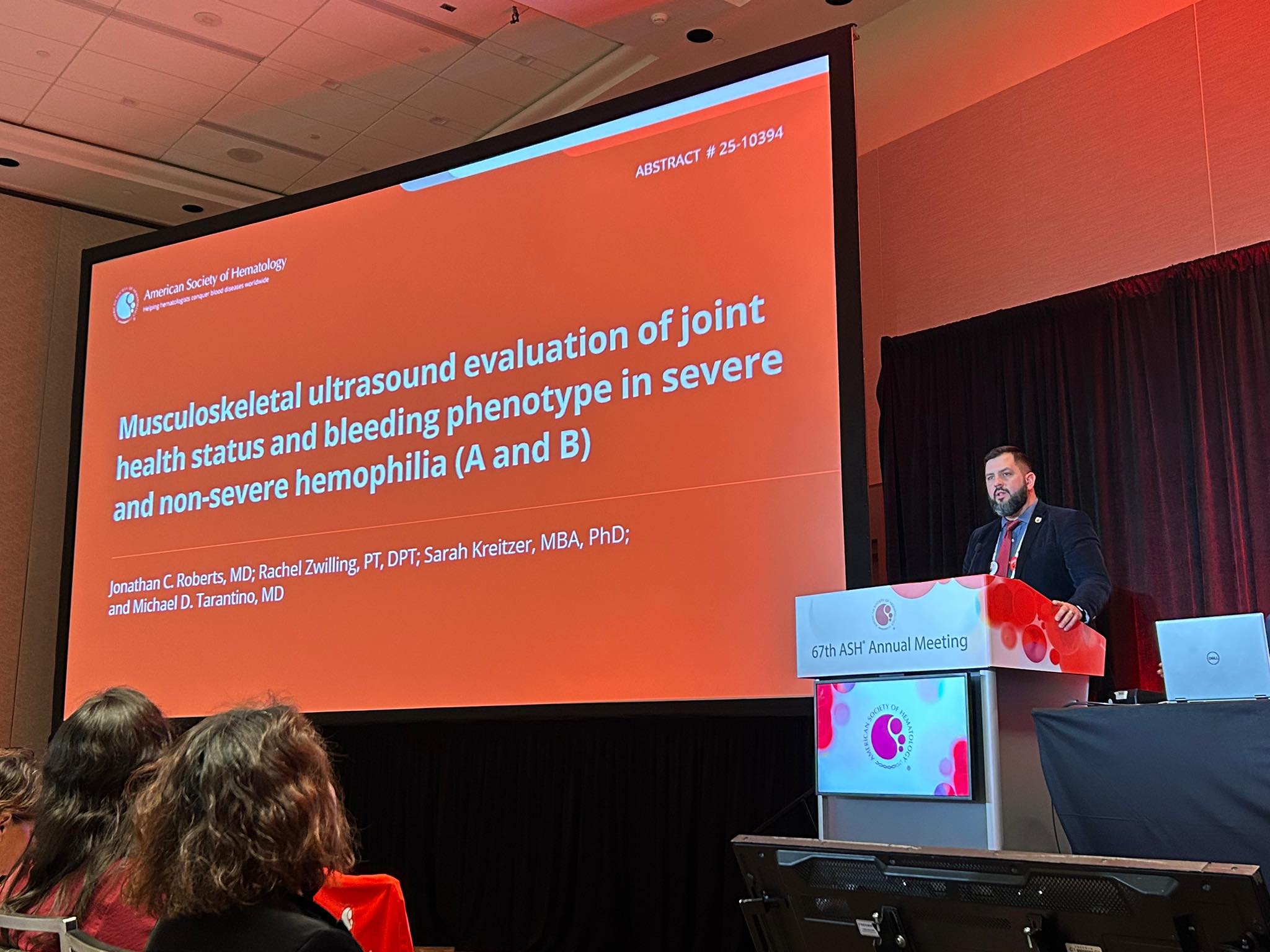 The BCDI team played a crucial role in education, research and presentations at the 2025 American Society of Hematology (ASH) Annual Meeting & Exposition in Orlando, Florida, from December 6 – December 9, 2025.
BCDI Associate Medical & Research Director Dr. Jonathan Roberts led an in-person presentation entitled: “Musculoskeletal ultrasound evaluation of joint health status and bleeding phenotype in severe and non-severe hemophilia (A and B).”
- This abstract was created by the team of BCDI blood experts with Dr. Roberts as the lead author, plus BCDI Chief Executive & Medical Officer Dr. Michael Tarantino, Physical Therapist Rachel Zwilling, and Research Study Manager Sarah Kreitzer as co-authors.
- Individuals living with hemophilia are known to have variable bleeding phenotypes, may have joint bleeding that is less clinically apparent, and musculoskeletal ultrasound has become an established approach for evaluating joint status. The findings of this study suggests that a larger, multicenter study is needed to expand the understanding of joint status and bleeding phenotype in patients with hemophilia.
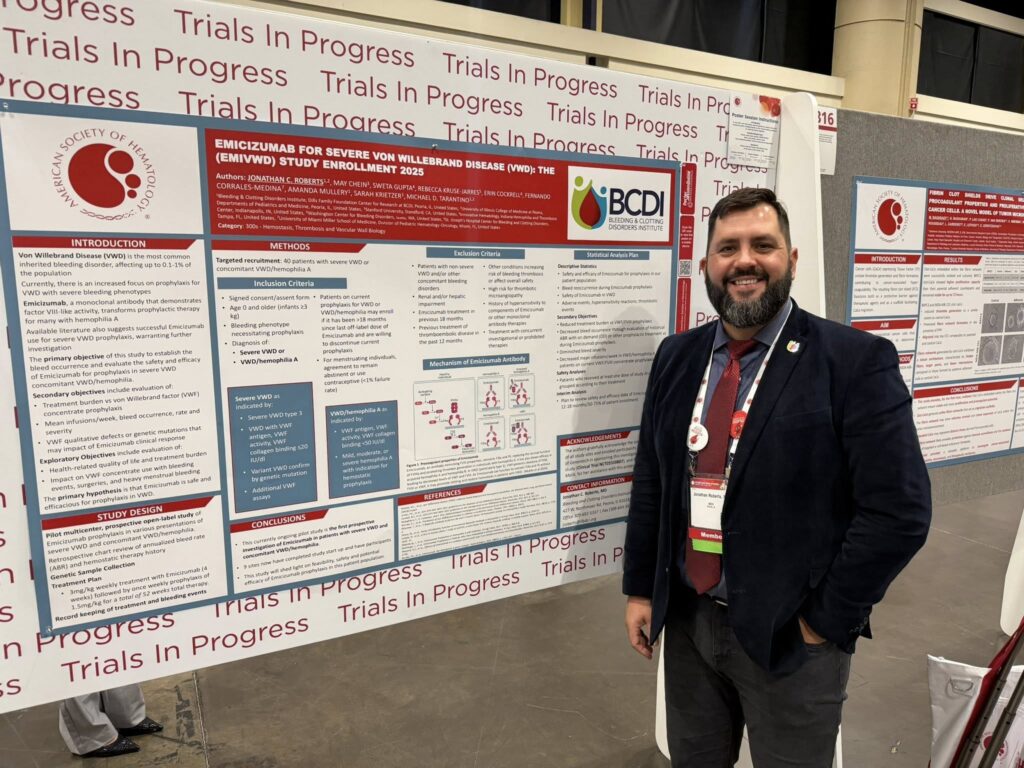
Dr. Roberts authored two other abstracts presented at the 2025 ASH Annual Meeting & Exposition:
- Dr. Roberts was the lead author, along with Dr. Tarantino and Sarah Kreitzer as co-authors: Emicizumab for severe von willebrand disease (VWD): The (EmiVWD) study enrollment 2025
- This ongoing BCDI-led pilot study is the first prospective investigation of emicizumab in patients with severe VWD. This study intends to shed light on feasibility, safety and potential efficacy of emicizumab prophylaxis with individuals living with VWD.
- Dr. Roberts as a co-author: Healthcare resource utilization in people with hemophilia treated within vs. outside u.S. hemophilia treatment center network clinics: An interim analysis of the CHESS US study
- This study suggests that the proactive, interdisciplinary approach of hemophilia treatment centers, like BCDI, is efficient and effective in preventing acute and long-term complications of patients with hemophilia, while reducing the burden on the broader healthcare system and improving health related outcomes of this population.